

Automatic Sprinkler System Design Rules
Automatic sprinkler systems are life safety and property protection systems that must be designed in strict accordance with recognized standards such as NFPA 13. Proper sprinkler design is not limited to selecting pipe sizes or placing sprinkler heads; it requires systematic evaluation of building hazard classification, sprinkler spacing, hydraulic demand, zoning, and installation requirements. The following sprinkler design rules summarize the fundamental principles used in professional fire protection engineering practice, based on NFPA 13 provisions and practical hydraulic design experience.
DESIGN RULE – 1: BUILDING HAZARD CLASSIFICATIONS.
The first and most critical step in sprinkler system design, as per NFPA 13, is determining the hazard classification of the occupancy being protected. Hazard classification defines the expected fire severity based on the quantity, combustibility, and arrangement of materials within a space. This classification directly determines the required design density, remote area, and overall system demand. An incorrect hazard classification can result in either under-designed or unnecessarily oversized systems. Therefore, proper evaluation of occupancy is fundamental to safe and code-compliant sprinkler design.
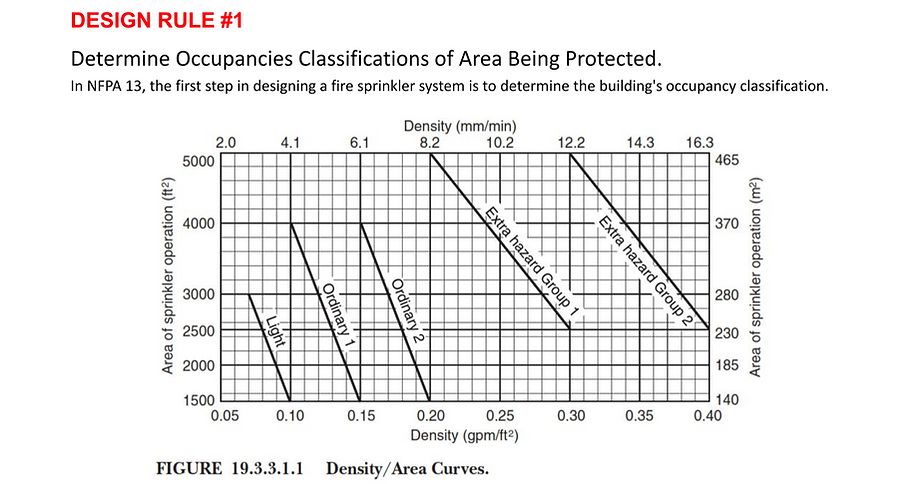
This figure from NFPA 13 illustrates the Density/Area curves used for hydraulically calculated systems. Each hazard classification (Light, Ordinary Group 1 & 2, Extra Hazard Group 1 & 2) has a corresponding minimum design density and remote area requirement. Once the occupancy classification is determined, the required water discharge density and area of operation are selected from this chart.

Light Hazard occupancies are spaces where the quantity and combustibility of materials are low and fires are expected to have a relatively low heat release rate. Typical examples include places of worship, offices, healthcare facilities, educational buildings, hotels, and residential units. These occupancies generally require lower design densities compared to other hazard categories.
Additional examples of Light Hazard occupancies include museums, theatres (excluding stages), libraries (reading areas), and similar environments with limited combustible loading. These areas primarily contain furnishings and light contents rather than industrial or storage hazards.


Ordinary Hazard Group 1 occupancies involve moderate quantities of combustible materials and moderate heat release rates. Examples include bakeries, laundries, parking garages, light manufacturing facilities, and ordinary storage areas. These occupancies require higher design densities than Light Hazard but are less severe than Group 2.
OH1 also includes dry cleaning facilities, restaurants (general dining areas), textile shops with non-combustible fabrics, and printing shops using non-combustible inks. The fire load is moderate, and processes do not typically involve highly flammable liquids or explosive materials.


Ordinary Hazard Group 2 occupancies involve higher combustible loading and greater fire intensity compared to OH1. Examples include chemical plants (non-high hazard), metalworking facilities, paint shops (non-flammable processes), and certain manufacturing operations. These areas require increased design density due to higher anticipated heat release rates.
Warehouses storing combustible materials, sawmills, plastic manufacturing, and food processing plants are typically classified under OH2 when the fire severity exceeds OH1 conditions but does not reach Extra Hazard levels.


Extra Hazard Group 1 occupancies involve high combustible content or processes generating significant heat, flames, or flammable vapors. Examples include rubber manufacturing, aircraft maintenance hangars, certain textile mills, printing plants, and chemical manufacturing (non-explosive). Fires are expected to spread rapidly and produce high heat release rates.
Extra Hazard Group 2 represents the highest level of hazard under NFPA 13 density/area method. These occupancies involve highly flammable liquids, explosive chemicals, refineries, spray painting operations, fuel handling areas, and high-risk chemical storage. Fires in these environments are severe, fast-spreading, and demand the highest design densities.

Summary: Why Hazard Classification Matters in Sprinkler Design
Hazard classification is not just a label — it directly determines the hydraulic design requirements of the sprinkler system.
Once the occupancy is classified under NFPA 13, it defines:
1️⃣ Required Design Density (gpm/ft² or mm/min)
Higher hazard levels require higher water discharge density to control the expected fire intensity.
-
Light Hazard → Lowest density
-
Ordinary Hazard Group 1 & 2 → Moderate density
-
Extra Hazard Group 1 & 2 → Highest density
2️⃣ Remote Area of Operation (ft² or m²)
The hazard classification determines the minimum area over which sprinklers must be hydraulically calculated.
-
Light Hazard → Smaller remote area
-
Ordinary Hazard → Medium remote area
-
Extra Hazard → Larger remote area
The total system water demand is calculated as:
Total Required Flow=Density×Remote Area\textbf{Total Required Flow} = \text{Density} \times \text{Remote Area}Total Required Flow=Density×Remote Area
This directly impacts:
-
Pipe sizing
-
Pump capacity
-
Water storage tank size
-
System pressure requirements
3️⃣ Overall System Cost and Infrastructure
As hazard level increases:
-
Required flow increases
-
Pipe diameters increase
-
Fire pump capacity increases
-
Tank capacity increases
-
System cost increases
Correct hazard classification ensures:
✔ Code compliance
✔ Adequate fire protection
✔ Optimized system cost
✔ Reliable hydraulic performance